Shure MV88 USB-C Stereo Microphone

Editors’ Choice Audio
Shure MV88 USB-C Stereo Microphone
Review by Angie Kibiloski
Shure‘s MV88 USB-C Stereo Microphone is a dual-capsule mobile condenser mic that plugs right into the USB-C port of your phone, with a variety of polar patterns and audio adjustment options. I briefly highlighted this mic in my CES 2026 coverage last month, and I’m happy to be able to deliver a full hands-on review now. Though there are a couple minor things I’d change about this device, overall, I’d absolutely recommend it for content creators who need to enhance their mobile audio recordings, and want a super portable mic without extra cords or dongles to manage, and without sacrificing the pro-audio quality of larger rigs. For convenience, size, and versatility of recording modes, this little mic is a winner.
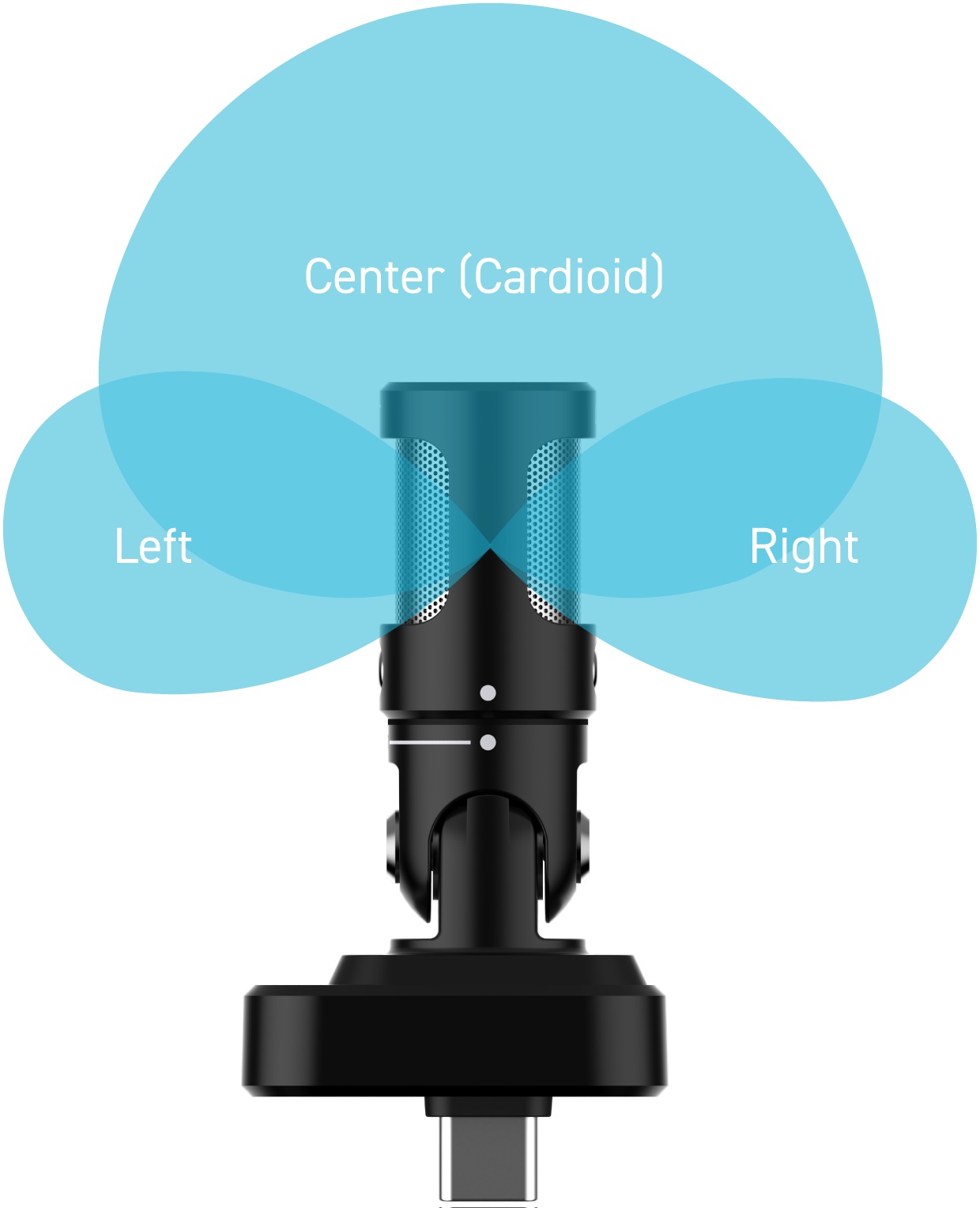
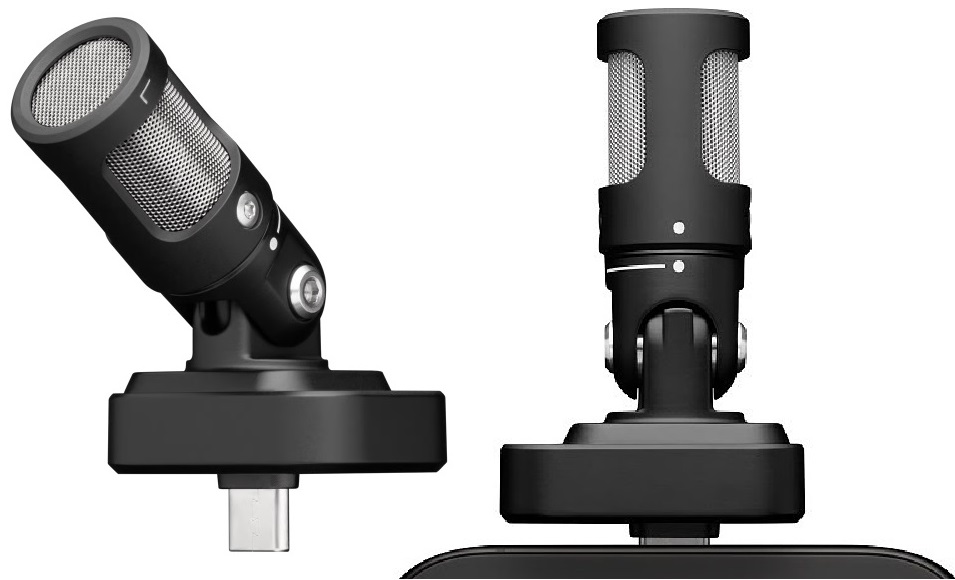
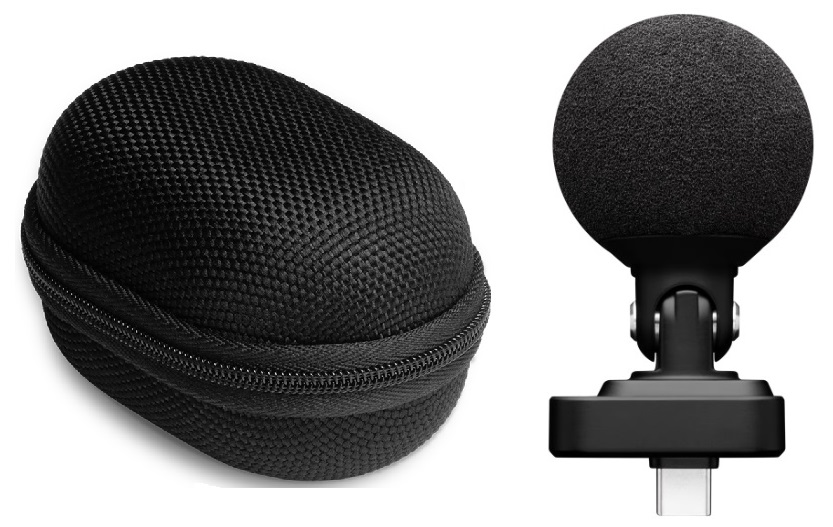
Shure is an undisputed leader in the audio market, so I wouldn’t expect anything less from them than a quality-built device, and the MV88 USB-C delivers with its hardware. This tiny titan is solidly constructed with all metal parts, so you needn’t worry about durability while taking it everywhere you go. It feels sturdy while remaining lightweight, and every moving part adjusts smoothly and stays snugly where you want it. The exterior components consist of the base platform, which houses an LED indicator for certain mic functions, the USB-C plug out the bottom, and the hinged mic rig out the top. This rig can be pointed straight out or folded up to a 90° angle, to better target the subject of your recording. Above the hinge is the cylindrical mic housing, which can be rotated 90° for adjustable stereo positioning, with metal mesh at the tip and on the right and left sides, behind which the dual capsules reside. Rounding out the hardware is a cute little foam windscreen ball with a hard rim that slides easily and securely over the end of the mic, and a compact hard-sided travel case that fits both the mic and the foam cap neatly.
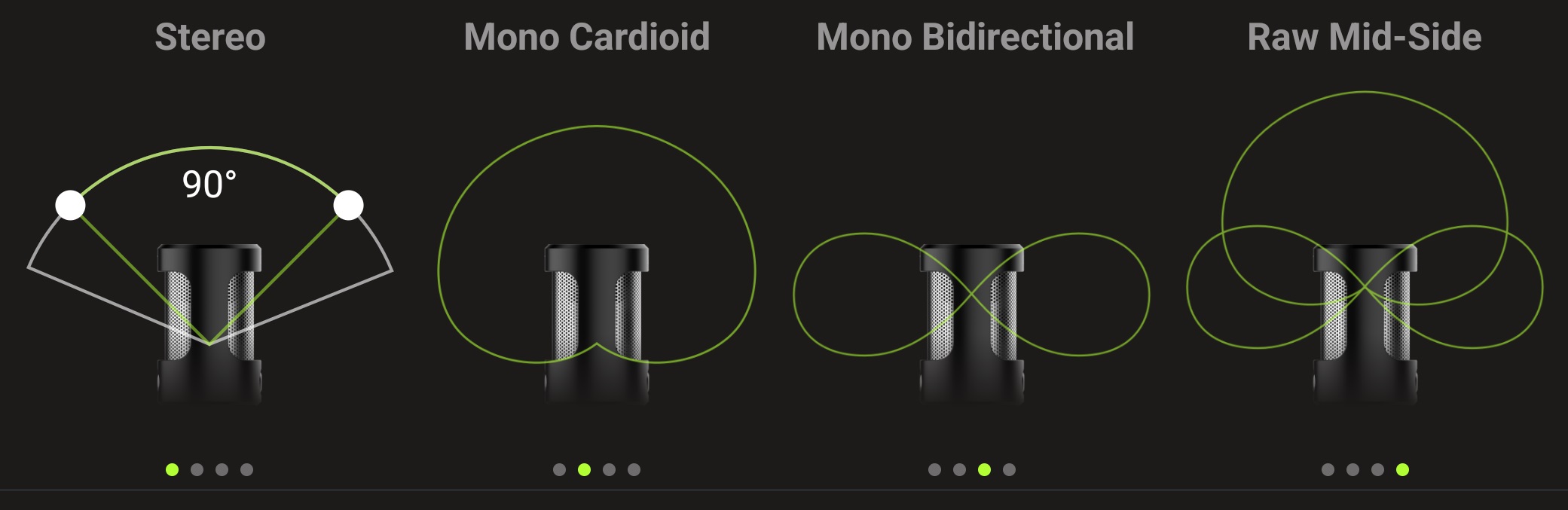
Going inside, the dual 10mm condenser capsules form a mid-side configuration, with one cardioid pointed out the top and one bidirectional pointed out the sides. This setup allows the mic to not only have 4 polar pattern options, but also a wide adjustable arc of stereo pickup. The MV88 USB-C specs feature a 20Hz – 20kHz frequency range, a bit depth of 24-bits, sample rate of 48kHz, gain range of 0dB – 36dB, and a max SLP at 120dB. As mentioned, this mic can switch between 4 pick-up patterns depending on your needs: stereo, mono cardioid, mono bidirectional, and raw mid-side. The stereo pattern engages both mic capsules and points out the top and sides of the cylinder in an adjustable arc, to widen or narrow the range of audio detection. The mono cardioid pattern only activates the capsule at the top, whereas the mono bidirectional pattern only utilizes the capsule facing the left and right sides. Finally, the raw mid-side pattern is an advanced stereo capture that engages both capsules and creates a 2-channel recording that can be separately adjusted in post-production with specific mid-side decoder software within a DAW and/or some technical know-how.
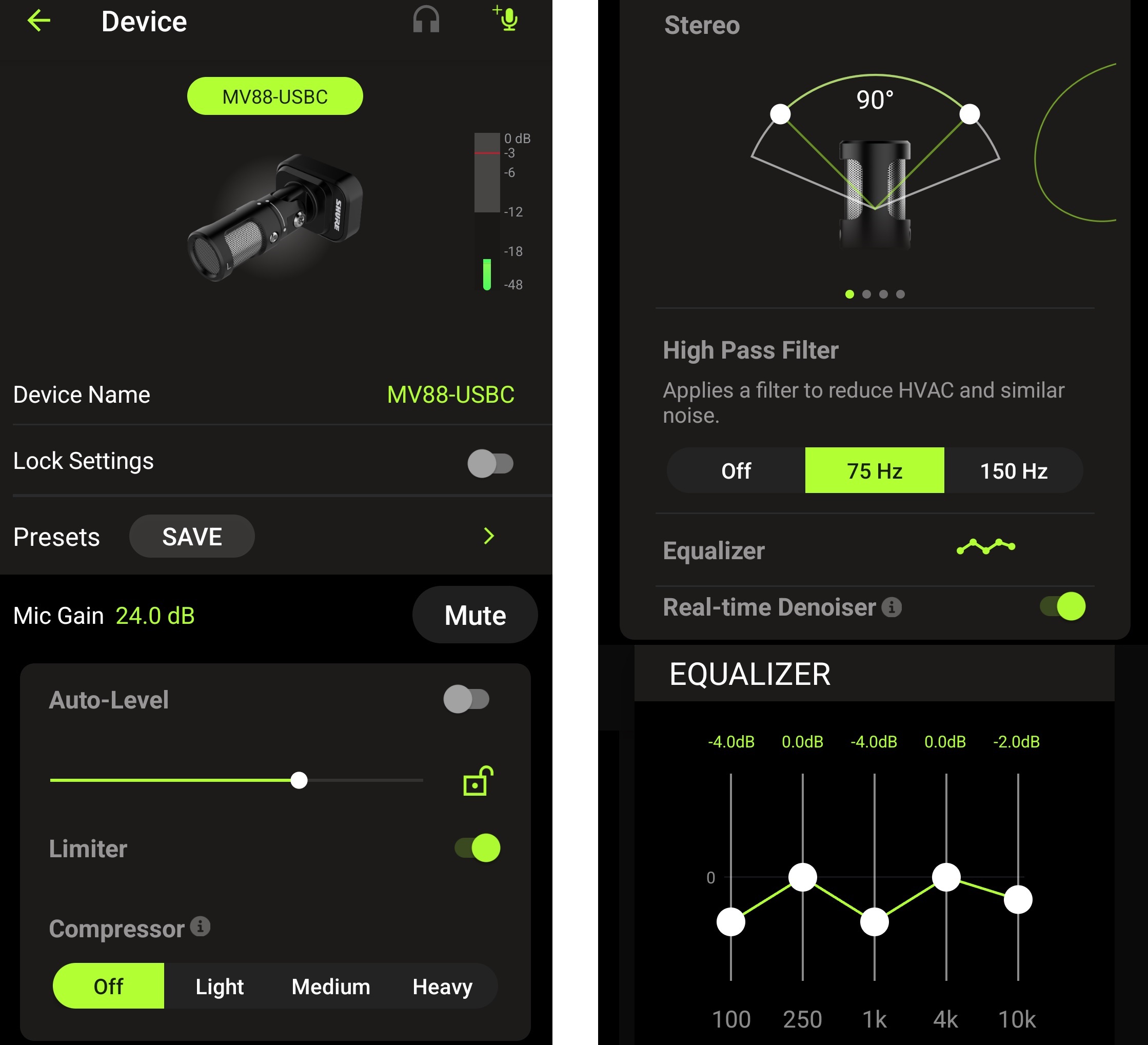
The MV88 USB-C is super easy to use, and can be plug-and-play with any mobile recording app, whether that’s the basic voice recorder or camera app that came pre-installed on your phone, or a more professional mobile DAW. Just plug it into your phone’s USB-C port and open your software, no additional setup required for its base function as a pro-grade mini microphone. This petite mic can do so much more, however, once you install either the MOTIV Audio or MOTIV Video apps, from where you can configure all the standard DSP parameters, as well as selecting one of the 4 polar pick-up patterns to suit your recording situation. Both apps have the same presets, audio adjustments, and pattern selection interfaces, with a fairly intuitive design. You’ll be offered 5 presets that have been optimized for speech, singing, acoustic instruments, and a loud band environment, with the 5th being a flat, or clean baseline with no adjustments added at all. You can create your own presets from this flat baseline, or any of the other presets if you need a helpful starting point, customizing the gain, limiter, high pass filter, compression, polar pattern, EQ, and real-time denoiser to your precise liking. The MOTIV Audio and MOTIV Video apps also each have a recording feature for their respective functions, and some limited editing capabilities.
I mentioned at the start that there are a couple minor things I’d change about the MV88 USB-C, so let’s do a quick breakdown of those. The LED indicator light on the square base is positioned on the USB-C side, so it faces toward the edge of the device it’s plugged into, and can’t be easily seen when actually in use without turning the device. I’d rather it be positioned on the rig side, so I could see if my mic is indicating that it’s connected, muted, or off while I’m recording. It would be fantastic if the mic could be muted directly on the hardware itself, either by physical switch or touch control, instead of only being able to do that in the MOTIV apps. To be honest, I found both apps to be a little clunky for recording, and especially editing, and preferred to use my own apps for actual content creation, only employing either of the MOTIV app for configuring the pick-up patterns and audio adjustments beforehand. Also, not sure why, but the MOTIV Video app worked better than the MOTIV Audio app, which was pretty laggy and kept crashing. Aside from these small things, I have no other complaints.
As I’d anticipated, Shure delivered a high-quality mobile mic with the MV88 USB-C, with well-built hardware and pro-grade tech inside. The sound quality was crisp and clean, with no fuzziness, pops, or distortions, and the versatility of the dual mic capsules opening up 4 different polar pattern options makes this a perfect portable device for a wide variety of recording situations. Though the apps let me down a little with their recording and editing features, the presets and fine-tuning DSP adjustments they provide are robust and satisfying. I love that it connects directly into a USB-C port without the need for a cable or extra dongle, needs no charging, pivots and rotates for directional recording, and is so incredibly compact. The price of $159 is very reasonable as well. I’d definitely recommend taking a closer look at the MV88 USB-C if you ever record audio or video on-the-go, to boost your casual recording to pro level.