
The NAMM Show 2026: Music and Tech in Harmony
The NAMM Show 2026: Music and Tech in Harmony
Article by Angie Kibiloski

This week saw the 125th anniversary of NAMM (National Association of Music Makers), and the 50th year of The NAMM Show at the Anaheim Convention Center, from January 22nd to 24th. Welcoming music industry brands and attendees from all over the world, this annual event draws nearly 2,000 companies exhibiting products of all types, from traditional instruments to MIDI technology, pro-audio to consumer accessories, home studio gadgets to stage craft equipment, and everything in between. Displayed across several convention center halls and hotel meeting rooms, these brands await tens of thousands of musicians and enthusiasts to come discover what’s new and innovative in the world of music creation tools. Despite not typically covering many of the instruments or accessories on offer, I always manage to find some cool consumer techie things scattered amongst the aisles of fancy guitars and drum kits, stage lighting and mixing boards. Here are a few that I came across in between admiring all the pretty instruments that I lack the skills to play.
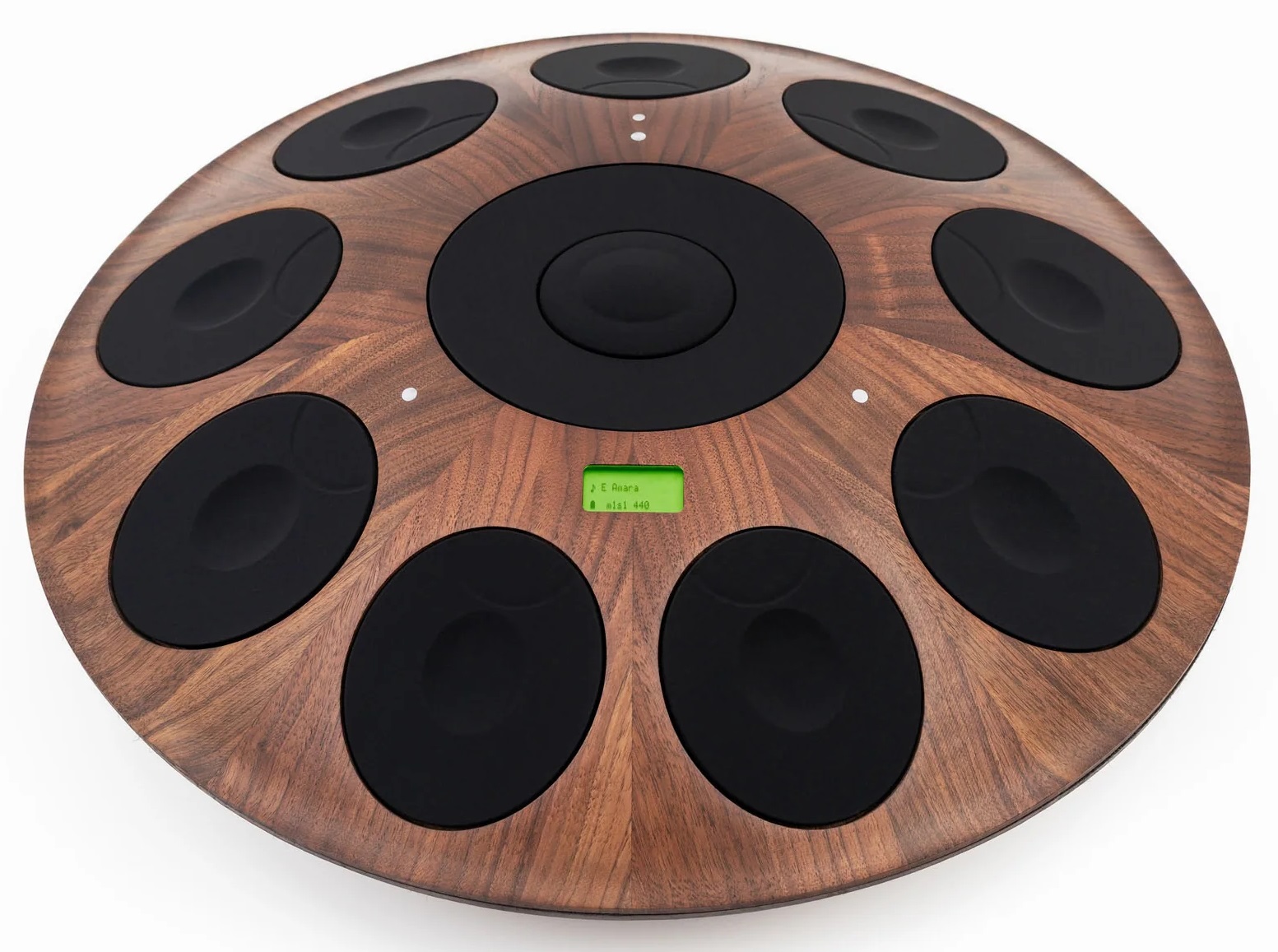 We’re going to start with the NEOTONE Digital Handpan, from Hungarian manufacturer Soundventure Ltd., a beautifully made MIDI instrument that takes virtual percussion to the next level. The NEOTONE is constructed using a variety of gorgeous woods, housing an array of MIDI touch pads, joining premium acoustic construction with virtual sound triggering function, allowing you to create versatile digital tracks without sacrificing the tactile nature of a traditional instrument. The flying saucer-shaped body, which can be built with your choice of ash, oak, cherry, walnut, or mahogany wood, has a large central pad on top, surrounded by 9 smaller pads, each one mapped to a different tone, and played like you would a standard handpan. These pads are pressure sensitive, detecting both the strength and placement of your tap within the hit area, and varying the tone likewise.
Through the connected app, you can map any MIDI sound pack to these pads for a fully customized instrument, though the most cohesive and instrument-specific will be the 6 scale packs that come pre-installed from the manufacturer. The NEOTONE doesn’t have an on-board speaker, so you will need to plug it into an external output, whether that’s personal headphones, your recording studio setup, or a speaker system as part of your on-stage performance kit, and with 8 hours of battery life, it’s convenient and portable enough for any of these situations. For US-based consumers, check out the multiple model options of NEOTONE on the Shoreline Music partner store, starting at $3,200, or worldwide from Play.DigitalHandpan.com, where you can also watch some videos of the instrument in action.
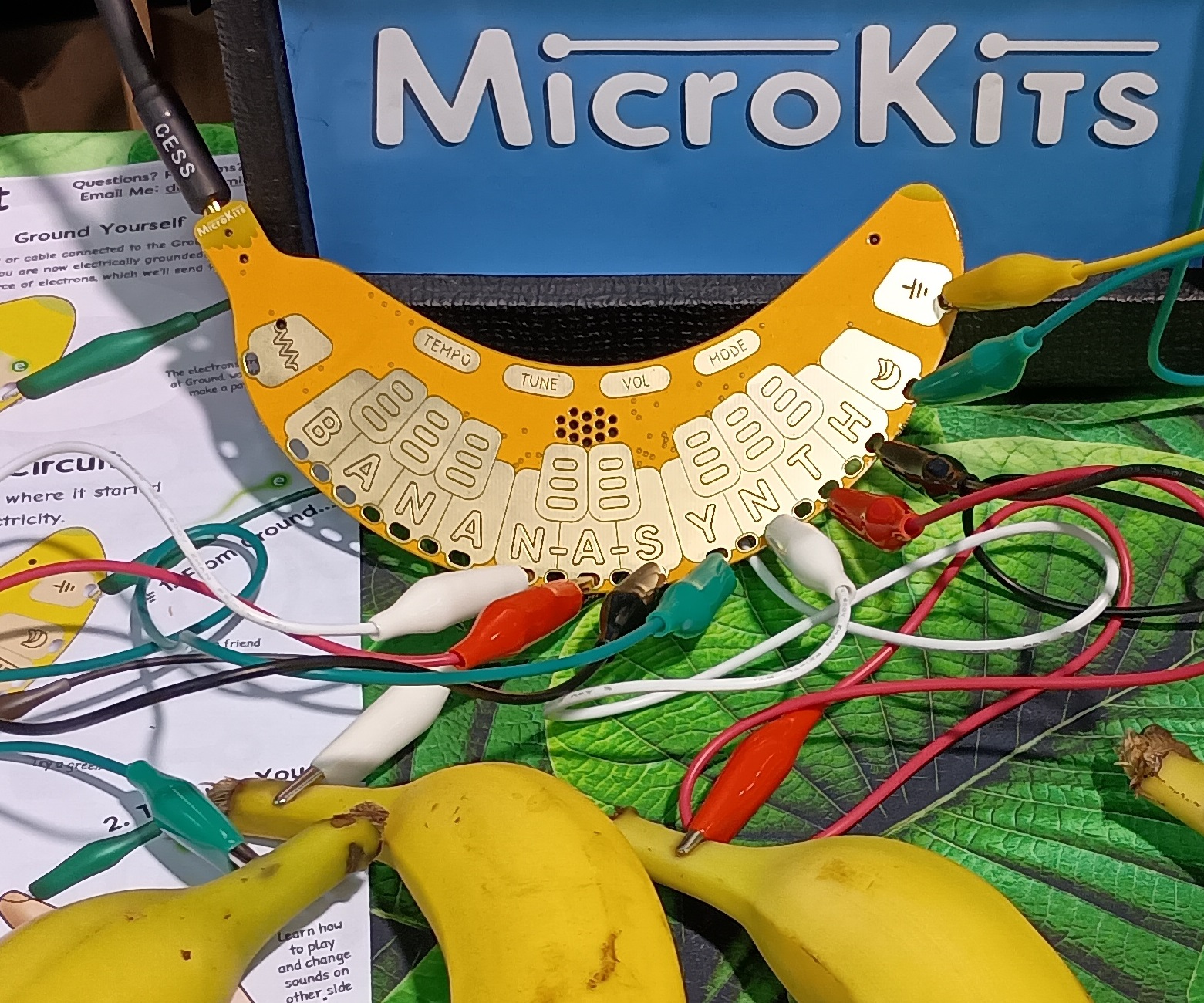 These next couple very quirky products might be my favorite things from the show, purely for their “WTF am I looking at?” nature. The Banan-a-Synth is exactly what is sounds like, a synth board shaped like a banana, and yes, it can be played via actual connected bananas as its touch interface. It can also be played using any metal or liquid-based conductive items, like copper tape or soup cans, though having an array of musical bananas (or any produce really) is certainly a unique way to grab attention. Banan-a-Synth is the 3rd product from MicroKits, a company aimed at teaching kids about building musical circuits, in a fun, accessible way.
The pocket-sized synth can be played directly on the device itself through the touch sensors along the curve, or by attaching the included clips to any conductive items (like bananas) to use them as input surfaces. Kids and adults alike can have fun experimenting on different household items to see which are conductive and which are duds. In addition to simply playing a scale of notes, there are buttons to adjust volume, metronome tempo, pitch across a 20-note range, and to switch between a variety of pre-installed instrument modes, including guitar, bass, organ, trumpet, and more, with additional applicable effects. The Banan-a-Synth is preparing to enter its Kickstarter phase, so sign up to be notified when that goes live, or explore the existing Theremin Kit ($49.99) and Synth-a-Sette Kit ($59.99) to get in on the musical circuit-creating action right away.
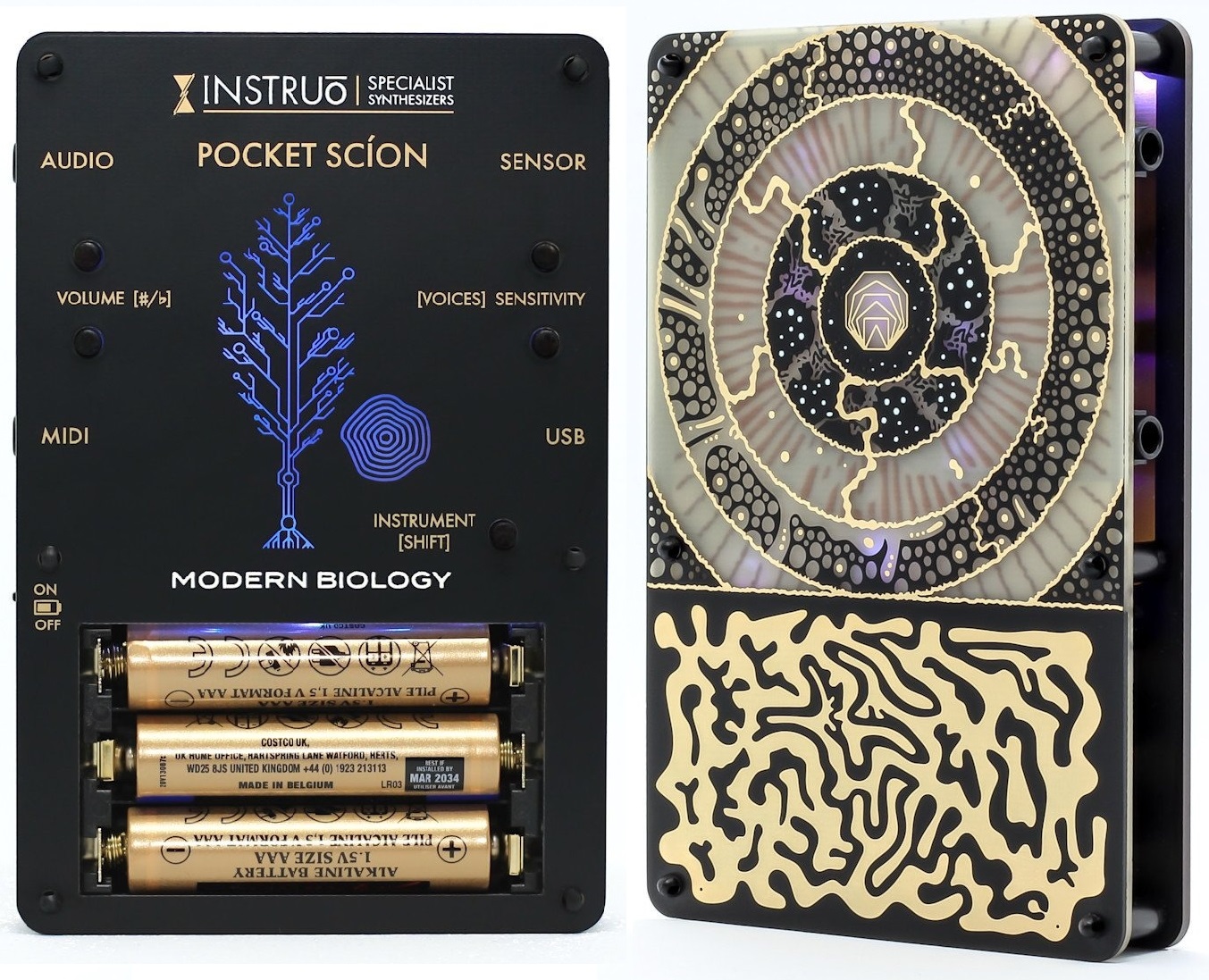 Continuing in a similar vein, Instruo and Modern Biology are also connecting modular synth technology to living organisms. This time, though, instead of utilizing conductivity to control existing sounds, their Pocket Scion device reads the bioelectrical signals created by living organisms and translates them into unique sonic feedback. This biosonification can present differently depending on what the device is clipped onto, so the pattern of notes and rhythms triggered by a fern may be quite distinct from that of a mushroom. The team behind this technology is studying the field of biosonification to learn more about which organisms produce particular types of wavelengths, and decided to create this accessible, consumer-friendly device so that everyone can get in on the scientific fun.
Take the Pocket Scion around your environment, listening to your local plants and fungi just by attaching the included nodes. You can hook it up to headphones if you just want to relax and commune with your neighborhood flora, or connect it to a computer for MIDI recording. So far, the device has 4 instrument profiles installed, giving the sonic feedback from plants a variety of musical expressions, but you can also use it with a DAW to control any of your own digital instruments or sound packs. Pocket Scion, as the name suggests, is small enough to fit in your pocket, lightweight, and powered by 3 AAA batteries, so perfect for taking out wherever you plan to explore. It’s beautiful too, with a sort of mystical cellular fungus design on the backside, and a tree-shaped circuit emblem on the front, which changes color to denote which of the 4 instrument modes you’ve chosen. To learn more about the science of this tech than I can explain, to read up on its developers, or to watch a video of it in action, check out PocketScion.com, where you’ll also find US and international links to purchase one for yourself at just $149.
 Changing modes a bit, Playtime Engineering‘s BlipBlox myTRACKS is a colorful, beginner-friendly groovebox, designed to get kids playing and learning music creation with a pared-down version of a profession sampler, think Playschool meets Native Instruments. While this console might look like a toy, though, it actually has much of the same functions as a studio sequencer, sampler, and drum machine, just on a more basic level. It has a 5×5 light-up grid of sound pads in the center, for triggering whichever sample pack you have loaded, effects and track selection buttons beneath, effects adjustment knobs above, and slider bars at the sides. Record vocals and other in-room sounds through the mic to create your own samples, or load them in from your existing library. MyTRACKS comes pre-loaded with 48 unique virtual instruments and 12 drum kits to get you started, with more being added in future updates. You can record up to 5 tracks on the device itself, or hook it up to your computer to have access to your DAW’s full track flow. If you need inspiration to get started on a song, or you just want a backing track to groove along with, myTRACKS can play one of its built-in melodies as accompaniment.
BlipBlox myTRACKS is really targeted to kids learning how to compose their first tracks, or just discovering how musical notes go together, but adults can have just as much fun with it too. Honestly, despite already having these same features on my professional MIDI keyboard and sampler pad, I kinda want to play with this myself. The large pads, colorful controls, and simple layout just make you want to reach out and play. For only $349, myTRACKS seems like a pretty nifty starter groovebox. If you want to learn more about what’s inside and what it can do, or maybe go ahead and purchase one for yourself or your kids, bounce on over to BlipBlox.com.
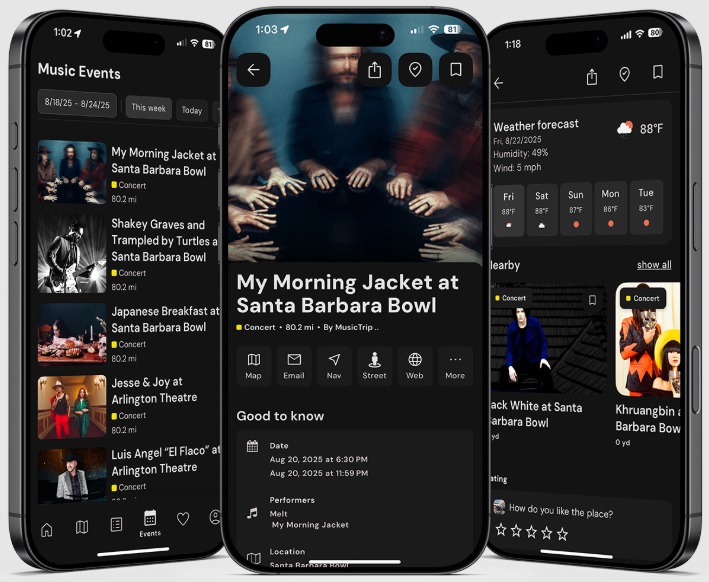 Next up, let’s take a break from creating music to enjoying listening to others creating it. The Music Roadtrip app can be your one-stop-pitstop for finding all manner of live music gigs, anywhere you may live or travel. This is not simply a collated list of music venues in your chosen area, but rather, an interactive catalog and dynamic calendar of small gigs, large festival events, musical landmarks, and retailers, searchable by location, venue type, artist, and other filters like ticketed/non-ticketed, all-ages, music genre, etc. You’ll be able to dive deep into venue details, artist profiles, and area info, linking to Spotify for music samples, Yelp for venue reviews, and a number of the app’s box office partners for ticket sales. There are many other features that I’m looking forward to fully discovering, like app-curated itineraries in music-dense cities, connections to local guides with knowledge of cool landmarks, and even AR games to help you explore music in your area. The Music Roadtrip app is totally free, on iOS or Android, so there’s no reason not to jump behind the wheel and let it be the navigator on your next musical adventure.
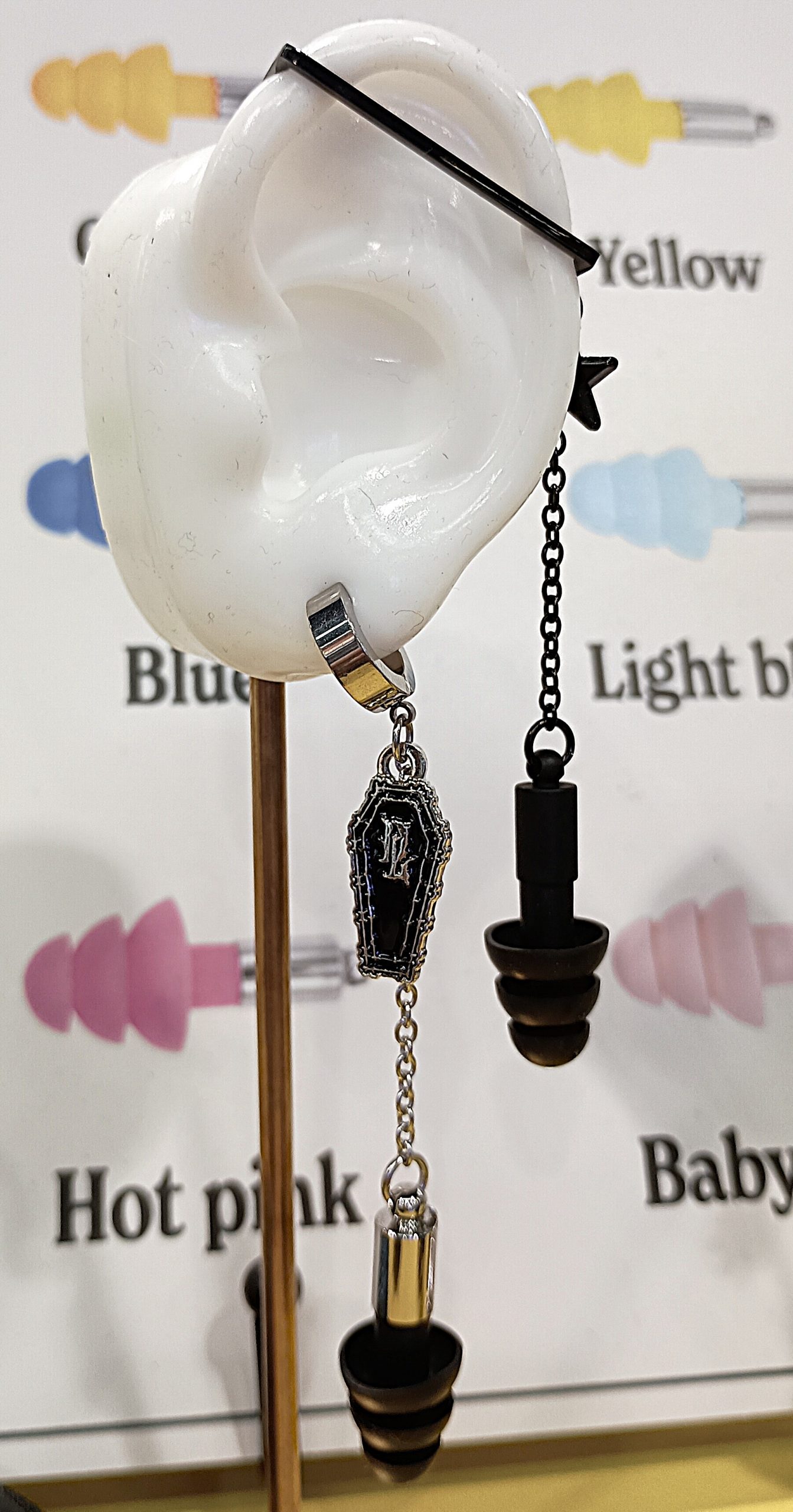 Wrapping it all up with an item that isn’t “tech” per se, but a necessity for anyone who frequents live music venues or travels the festival circuit. Loud music is great, and there’s nothing quite as exhilarating as standing near the giant stage speakers and feeling the bass literally moving your body, but it’s undeniable that continuous exposure to high decibels can have a lasting impact on your auditory health. Hearing protection is a must, and for getting out on the dance floor, or frolicking in the festival pit, earplugs are the go-to option. They’re small, though, and easily dropped or forgotten in a pocket, so Plug & Play Jewelry has created a stylish solution that will not only allow you to keep your earplugs handy and always at the ready, but also add a cute accessory to your fashionable ensemble.
Buy pre-designed selections of stainless steel, hypoallergenic earrings and necklaces, or customize your own by choosing your favorite earplug color, jewelry style, and decorative charm. You can even reach out to the designer to create custom charms with your own personal, band, venue, or event iconography. Necklace styles are simple chains with a magnetic front clasp, while earrings offer a wide variety or styles including studs, hooks, clip-ons, and crowns, all starting at $30. If you frequently enjoy visiting loud music venues, or really any space where the decibels might be a little harsh on your hearing, Plug & Play Jewelry has your new favorite fashionable and functional accessory.
Unlike the week-long CES, The NAMM Show is always a single-day event for me, as most of what is displayed just doesn’t fit into my regular tech coverage lane. I feel like that single day is well spent, however, when I can discover a few fun and unique items that might fly under the radar of a typical consumer. I hope I get to play with some of these products in the future, and perhaps be able to deliver more in-depth reviews than this brief highlights list allowed. Keep your eyes on our Featured Reviews section for any of those that might drop, as well as the many products I highlighted from CES at the start of the year.